
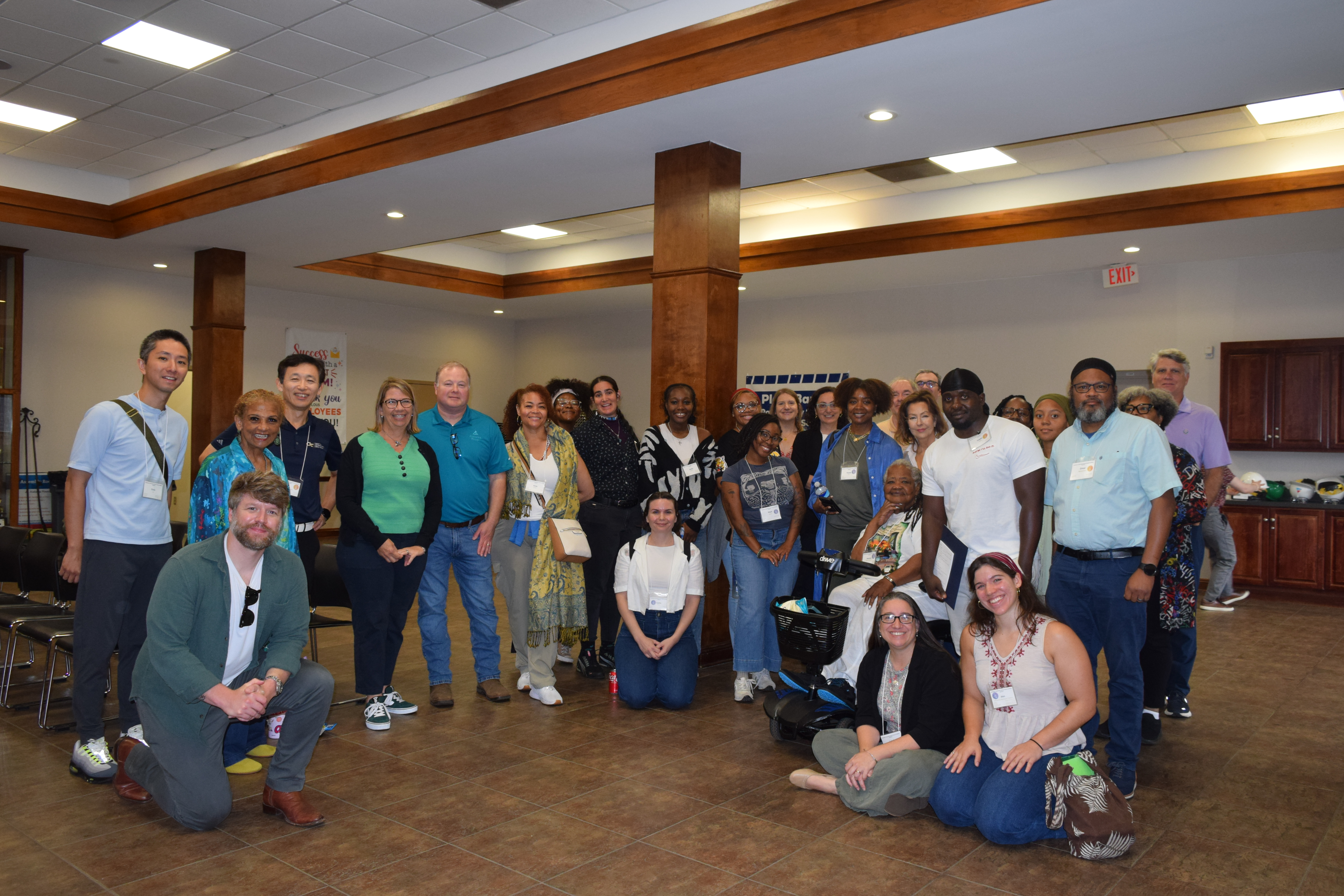
This August, the Southeast Community Energy Futures Academy (SCEFA) gathered in the historic city of Mobile, Alabama, for the last in-person workshop of the pilot program. After working together for nearly nine months, these days served to showcase the deliverables the participants had created, engage in feedback on their projects, and network with one another and the community of Mobile who welcomed us. Our trip was packed with education from a variety of different places that enriched our understanding about community and its relationship with industry, history, assets, and gaps in knowledge related to the emerging energy transition technologies (EETTs) that can inform our work now and in the future.
Learning about the Community
We took a few tours while in Alabama, immersing ourselves in the local communities of Mobile and Mt. Vernon and learning about their industries. On a research vessel excursion, we heard from a marine biologist at the Dauphin Island Sea Lab who introduced us to the port city’s resources and unique biological profile, as well as one of its industries, natural gas production. Related to industry and energy, we took a tour of the largest facility in Alabama Power’s system, where we learned about the energy generation system in the city, its economic benefits, and the potential opportunities it has for jobs and workforce development. These tours served as opportunities to learn about the state of industry in relation to technological development and to think about how industry relationships with communities could shape these developments.
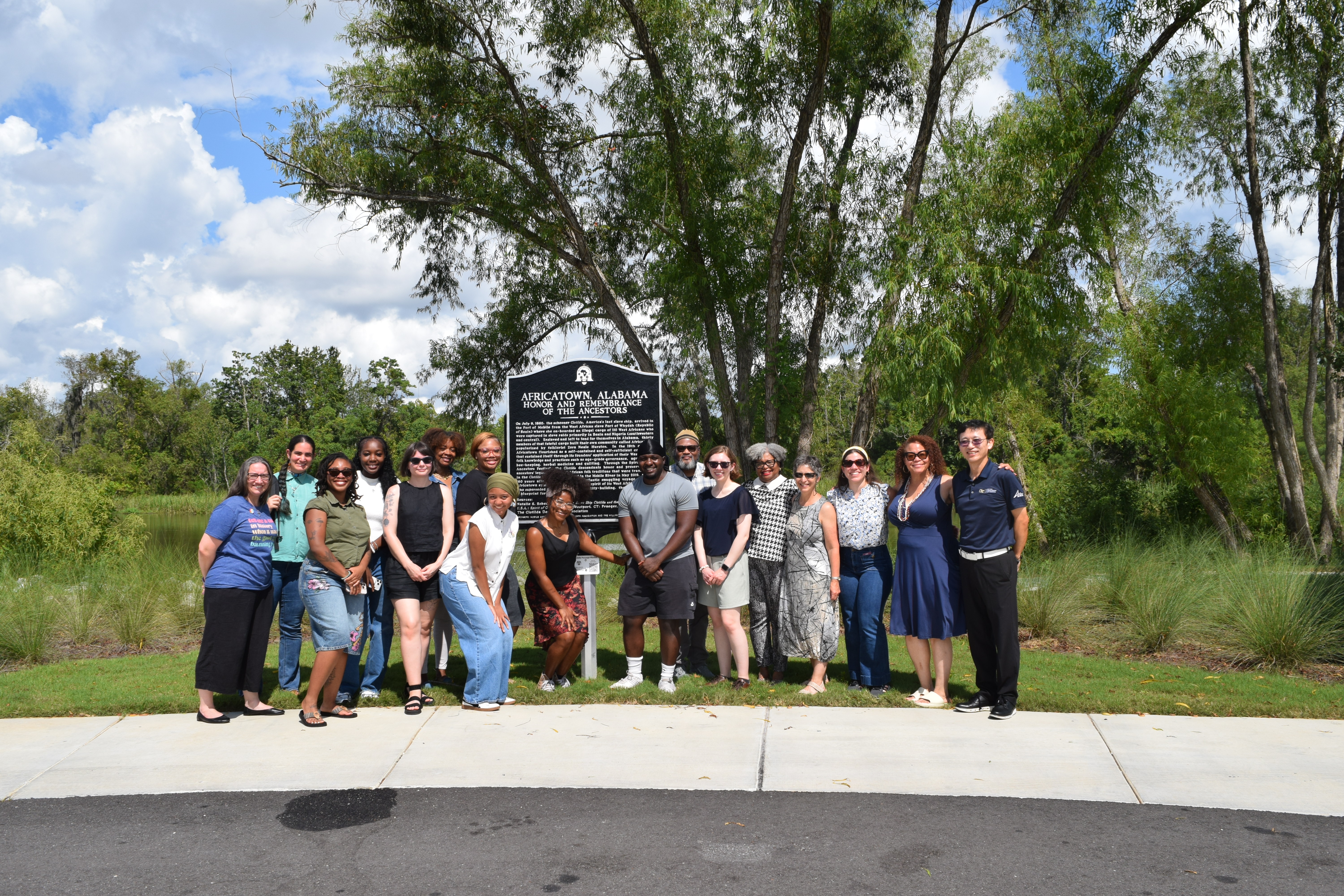
On the historic front, we started our first day of our workshop with a historic tour of the city in Africatown that showcased the history of slavery and resilience, as well as current development projects in the community. On our second day, we spent time with residents of Mt. Vernon, AL, learning about their project to heal their community, how intergenerational gaps can be addressed, and what assets they have related to their historical sites and geographical marvels. These tours served as an opportunity to meet and commune with new people and opened conversations about local resources, community assets, and how historical contexts frame them. Many of the SCEFA participants were able to draw connections to their homes and reflect on how some of the challenges communities face in Mobile and Mt. Vernon extend across the Southeast and raised questions about how community readiness can be improved to prepare for EETTs.
Learning from Each Other
The participants of SCEFA are made up of both technologists and community partners from a variety of different professions and backgrounds. Our workshop included presentations by technologists within our program, researchers from the University of Alabama, and deliverables by our community partners. Our technologists explained work being done in direct air capture (one of the EETTs) by the Southeast Direct Air Capture (SEDAC) Hub team and answered questions about carbon capture technologies. University of Alabama partners discussed how community knowledge about EETTs can be analyzed. We interacted with their work through an activity where we discussed direct air capture and drew connections between its impacts and stakeholders, gauging what we knew about the subject, informed by our time in SCEFA and elsewhere.
In another interactive activity, created by the SCEFA Alabama state team as one of their program deliverables for this pilot, a role-playing game was conducted with the program participants and the local youth community. The activity’s purpose is to be used as a tool to teach communities how to become effectively civically engaged. Participating in this activity and speaking to members in my group contextualized and highlighted what it means to advocate for your needs against large corporate projects, engage meaningfully with stakeholders, and how building these skills is critical in the creation and maintenance of equitable systems.
The SCEFA Mobile workshop concluded with presentations from each of the state teams, showcasing their deliverables that they had created over the course of the workshop. They created community guides, stakeholder engagement materials, and asset maps to be used as resources to prepare for the Southeast’s industrial development related to EETTs. Each presentation highlighted why the work being done is important, what each state’s unique landscape can teach us, and what successful community and technological expert collaboration can look like.
What We Learned
An overall theme of this trip was an acknowledgment of diverse expertise and how technical, social, and historical knowledge can be bridged to develop a just and sustainable energy transition. Discussions highlighted that innovation is strongest when the people developing EETTs and the communities that would experience their impacts are part of the same conversation. Technologies may offer significant environmental benefits on paper, but their deployment is most effective when it incorporates local knowledge and community priorities. Rather than viewing these perspectives as barriers to progress, participants emphasized their role in shaping more thoughtful, equitable, and successful energy solutions. My colleague, Jamila Morris, put it best in her own reflection,
“I kept thinking about a point made about how someone can support carbon capture and recognize its potential environmental benefits while still having concerns about that infrastructure being built near their own home. Before this experience, I think it was easier for me to focus primarily on what a technology could accomplish. Being there made me think more about the people who already have homes, families, histories, and connections to the places where these projects may be developed. I think that is something important to consider not only in Alabama or the Southeast, but anywhere these technologies are being introduced.”
The purpose of SCEFA was centralized in this workshop, as we were able to exchange information, further develop relationships and partnerships, and discuss a path forward. Though this workshop was the last in-person conference of the SCEFA pilot program, many of the participants shared the sentiment that the program had served its purpose in creating a community of practice, an ongoing and continuously developing network of people with a common interest. This workshop, and this program at large, demonstrated how collaboration will continue to shape the future.
Learn more about SCEFA here.