
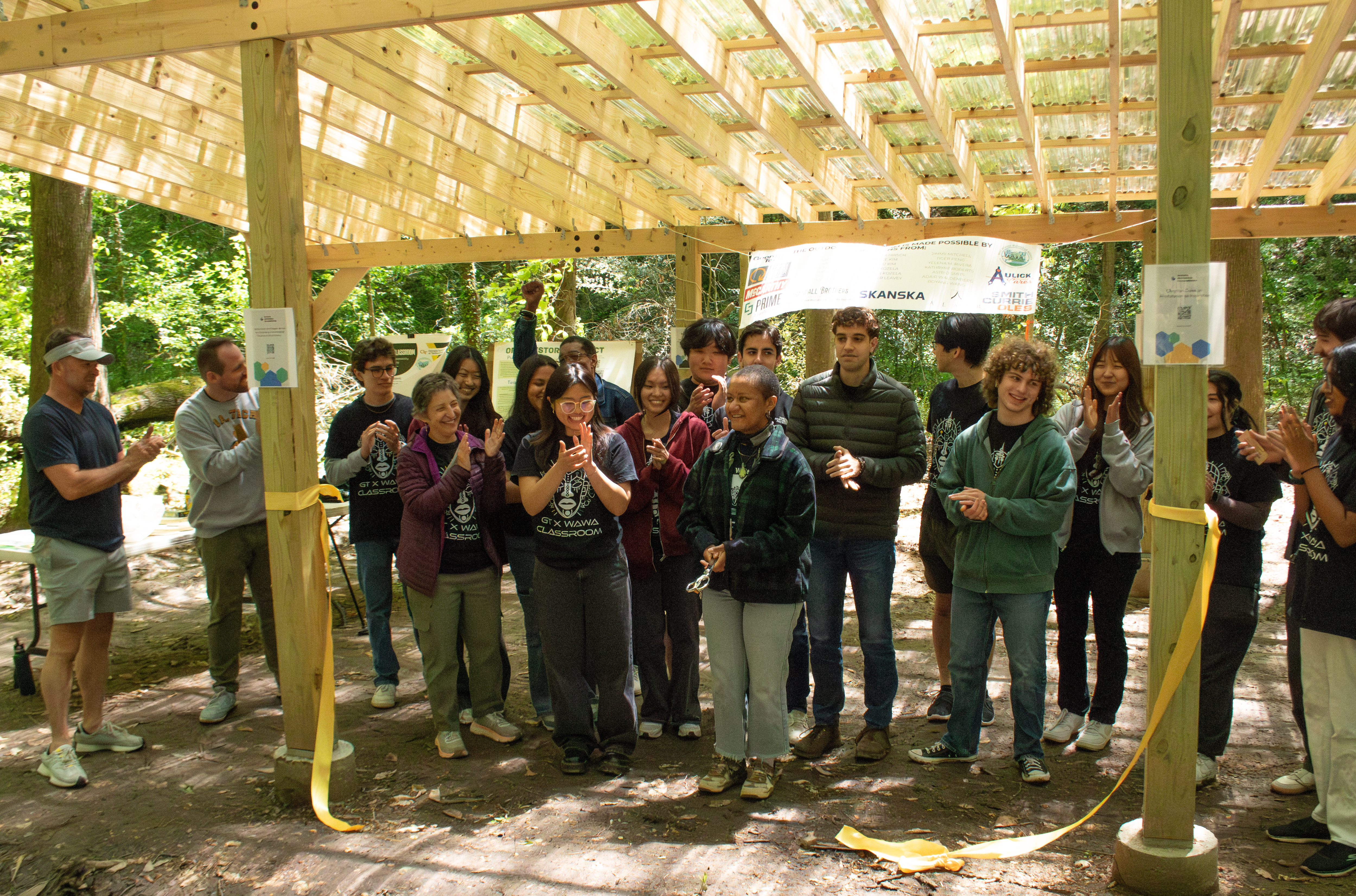
Georgia Tech’s Center for Sustainable Communities Research and Education (SCoRE) is celebrating its 10th anniversary, marking a decade of transformative work that has bridged campus and community to advance sustainability across Atlanta and beyond.
Visionary Beginnings
Launched in 2015 as Serve-Learn-Sustain (SLS), SCoRE aimed to integrate sustainability and community engagement into Georgia Tech’s undergraduate curriculum across all of its colleges. The program came about through a campuswide Quality Enhancement Plan (QEP), required for Georgia Tech to retain its accreditation. The designation comes once every 10 years from the Southern Association of Colleges and Schools Commission on Colleges (SACSCOC).
“SLS was ahead of its time, bringing together sustainability and community engagement to change the culture at Georgia Tech,” observes Ellen Zegura, a three-decade veteran of Georgia Tech who co-founded SLS with Beril Toktay, now executive director of the Brook Byers Institute for Sustainable Systems (BBISS).
SLS’s inaugural director, Jennifer Hirsch, is an applied cultural anthropologist who moved here from Chicago for the role — and now serves as senior director of SCoRE. “It’s very unusual for a university to have an office dedicated to both sustainability and community partnerships,” she says. “Most sustainability offices focus on facilities and operations, but Georgia Tech had the foresight to institutionalize an office that’s about advancing sustainability with communities. What I’m most proud of from our first 10 years is that we have built long-term sustainability partnerships that are truly grounded in community leadership.”
Under Hirsch’s leadership, SLS fostered collaborations with more than 40 community-based organizations, collaborated with the School of City and Regional Planning to modify and relaunch the sustainable cities minor, and helped create a culture of community-based sustainability education and research with faculty collaborators across campus.
In July 2021, as the five-year plan came to an end, Georgia Tech earned a commendation from SACSCOC for “exceptional execution” of the QEP, stating that SLS served “as a model of how a QEP can transform an academic culture.”
Sparking a Cultural Shift at Georgia Tech
Since the beginning, SLS collaborated with faculty on both teaching and research, sparking a major cultural shift and setting the stage for the opening of two offices — SCoRE, which is now housed in BBISS, and Community-Based Learning, housed in the Office of Undergraduate Education and Student Success.
“Thanks to SCoRE, community-engaged sustainability research is growing in rigor and prominence at Georgia Tech,” notes Toktay, who helped bring the team under the Office of the Vice President for Interdisciplinary Research (VPIR) umbrella to embed community engagement into the Institute’s research mission.
“Community-engaged research is fundamental to how Georgia Tech improves the human condition,” says VPIR Julia Kubanek. “When we co-create knowledge and solutions with communities, we're not just conducting research — we're building partnerships that ensure our work is grounded in real-world needs and has lasting impact.”
Uplifting Students to Pursue their Passions
“I found that SLS really uplifted students at Georgia Tech, including myself when I was a student. Students have a desire to apply their technical training out in the real world, especially to create lasting positive impact in communities. SLS was a great platform to empower students to do that,” recalls Nicole Kennard.
After graduating and completing her graduate studies, Kennard came back to Tech as the inaugural assistant director for community-engaged research in BBISS — another example of how SLS was institutionalized.
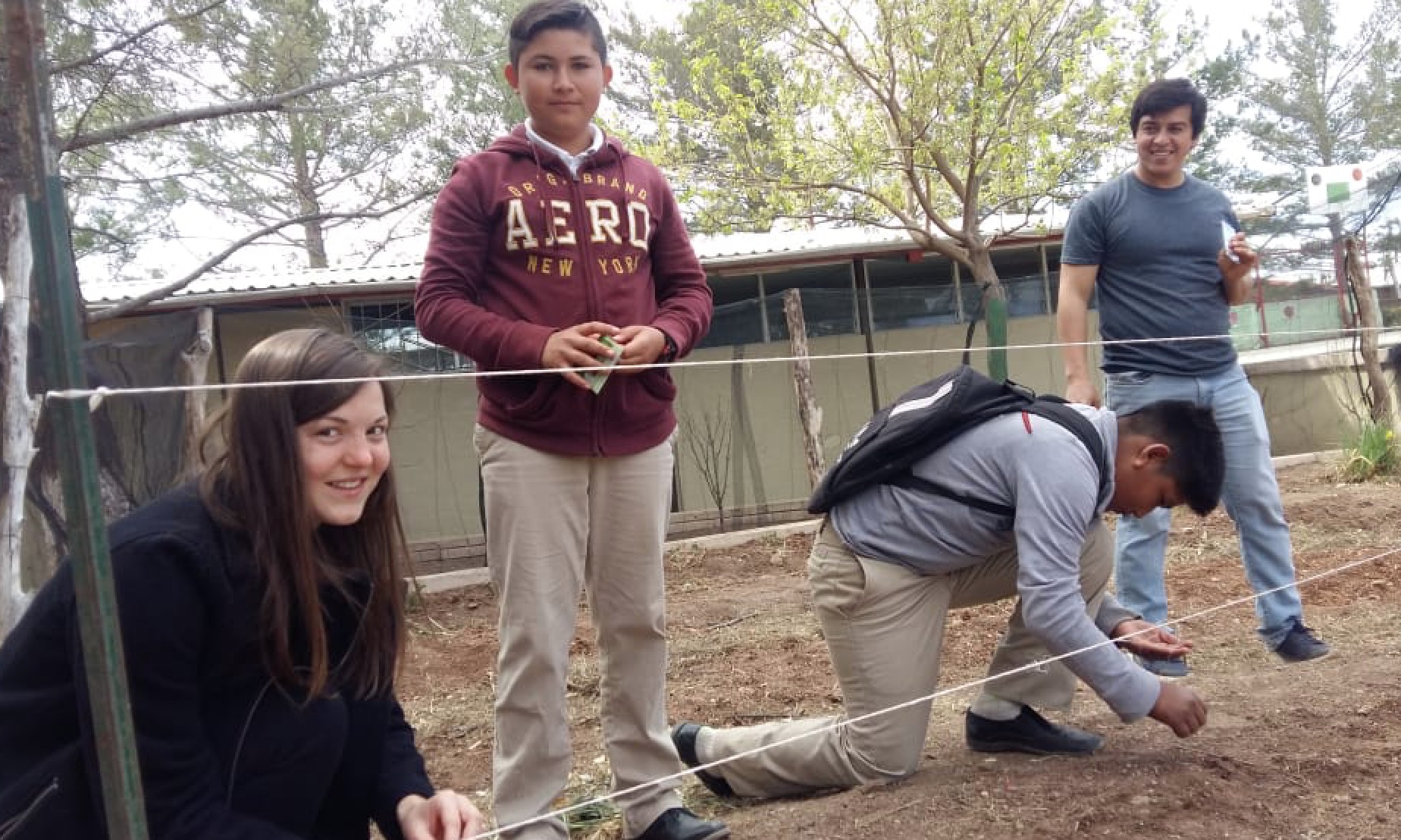
SLS also inspired Adair Garrett, now a civil and environmental engineering Ph.D. student at Georgia Tech. “SLS created the lens through which I viewed all other projects,” says Garrett, whose early exposure to SLS during high school sparked a passion for sustainable development, shaping her academic path in sustainability and transportation engineering.
Jennifer Leavey, assistant dean in the College of Sciences, says SLS encouraged students in technical fields to step back and consider the broader societal context of their work. This shift is crucial, she argues, because “It’s often easy to get excited and carried away by new technologies without thinking about their impact.”
Providing Pathways for Faculty to Collaborate with Community Partners
For Allen Hyde, associate professor and director of undergraduate studies in the Ivan Allen College of Liberal Arts, SLS provided a path for him to embed community engagement with the nearby Grove Park neighborhood into his urban sociology courses.
In 2018, two of Hyde’s urban sociology classes partnered with the Grove Park Foundation to conduct oral history interviews with residents and document the community’s experiences and perspectives amid gentrification and new development.
More recently, Allen has conducted several community-engaged research projects facilitated by the SCoRE team, including National Science Foundation-funded research on a youth program to improve disaster resilience in Savannah, Georgia; resilience hubs in the Southeast; and the social, environmental, and economic effects of data center sites on surrounding communities.
Building Long-Term Partnerships
As the Grove Park project demonstrated, the impact of SLS, and now SCoRE, extends far beyond campus. One long-term partner is the Henderson School Alumni Association Trust (HSAAT) in Jackson, Georgia. It was founded by Chuck Barlow Sr. to redevelop the neglected buildings of the Henderson Elementary and High School — a segregated school built in the 1950s for Black students — into a hub for STEAM education, workforce development, multigenerational recreation, community health, and entrepreneurship.
Barlow credits Georgia Tech and SCoRE with giving HSAAT critical support in areas such as strategic planning, vision development, and community engagement. For example, architecture students visited the grounds and gymnasium and provided ideas of what the property could become.
“The students’ visions of our property were beyond our imagination,” recalls Barlow, crediting the students’ work with reigniting the board with new energy, innovative ideas, and a structured process to help the volunteer-run organization overcome burnout. “Now we have purpose, passion, persistence, and process in place,” he says.
Scaling SCoRE Beyond Georgia Tech
Looking ahead, SCoRE is focused on further embedding community-engaged research and teaching into the fabric of the Institute. “We don’t want this to be just SCoRE and a handful of other units,” Hirsch says. “The question is, what does it mean for Georgia Tech as an institution to really make community engagement a core part of its mission? We have a strong foundation, and we’re committed to building on it for even greater impact in the future. This is our responsibility as a public institution.”
Additionally, building on its work with the United Nations-affiliated RCE Greater Atlanta network — a multi-stakeholder network that SLS co-founded in 2017 with collaborators from Spelman College and Emory University, and which Hirsch continues to lead — SCoRE is committed to advancing community-led sustainability for the region. “We’re trying to pioneer community collaboration models inside Georgia Tech, other higher education institutions, and big institutions like government,” Hirsch says.
A top priority for SCoRE has been expanding community engagement and sustainability efforts across Atlanta and Georgia’s higher education landscape, including focusing on historically Black colleges and universities.
For Tim Lieuwen, Georgia Tech’s executive vice president for Research, SCoRE’s work will help accomplish a key component of the Institute’s strategic plan in the coming years.
“We have four ‘big bets’ at Georgia Tech. Big bet number three is to double the scale and impact of research over the next 10 years. Things like starting companies, working with industry, and working on real-world problems are very much part of that ethos,” he says. “Community-engaged work is a crucial pillar for how Tech will increase its impact.”
JOIN US for our 10-year Anniversary Celebration, scheduled for January 20th from 4:00-7:30PM at The Clubhouse in Tech Square. See the details and RSVP here!